
A Practical Guide to the Difference Between uPVC and WPC for Modern Homes
The difference between uPVC and WPC is in their materials, use and performance. uPVC is described as an extremely durable plastic-based material that is typically used in doors and windows because it is weatherproof, waterproof and also requires minimal maintenance. WPC is a reference to Wood Plastic Composite, can be created by combining wood fibers with plastic creating the appearance of wood, which is perfect for use in interior doors as well as decorative uses. In the simplest words, uPVC is better for outdoor usage where the durability and protection from heat, rain and termites are crucial. WPC is a great option for indoor spaces where appearance are more important than the weather resistance. Understanding the difference between uPVC and WPC helps homeowners pick the appropriate material based on their location and budget as well as long-term requirements.
Understanding Modern Building Materials: Difference Between uPVC and WPC
Modern construction centers on building materials that are long-lasting as well as cost-effective, and are easy to maintain. uPVC and WPC are a good fit for these needs, and that’s the reason they are quickly replacing traditional wood in a lot of houses.
uPVC is commonly used for windows, doors, and frames, particularly in areas where it is exposed to rain, dust, and sunlight. It is well-known for its durability and insulation properties as well as its durability. WPC, on the other hand, is a popular choice for doors and panels in the interior and other ornamental elements due to the fact that it has a wood-like appearance and is more resistant to pests and moisture.
Windows and doors made of traditional wood, even though they look attractive, are often plagued by issues like termite infestations as well as swelling, warping, and regular maintenance. uPVC and WPC can overcome several of these issues and are the preferred choice for homes with modern designs. The distinction in uPVC and WPC lies in their construction performance, design, and compatibility for various uses.
What Is uPVC? Features, Benefits, and Common Uses
What is uPVC?- uPVC is Unplasticized Polyvinyl Chloride. As opposed to PVC, UPVC does not have plasticizers in it, making it strong and rigid- which means it cannot be bent. This is the reason why it is uPVC doors, windows, and structural frames are ideal.
Key Properties of uPVC
One of the main advantages of uPVC is durability- which means it has long-lasting properties. So they do not get any damage like corrosion even if subjected to harsh weather conditions. Also, another factor that leads uPVC to last longer is – they are resistant to insects, termites. Weather resistance is another characteristic. uPVC can tolerate different climatic conditions. Hence, these are best used in India due to the varied climatic regions. Whether it be rainy season or summer, uPVC can withstand well. uPVC is well-known because of its ease of maintenance. It does not require frequent polishing, painting, or any other routine repairs. Simple cleaning using soap and water is sufficient to keep uPVC windows and doors fresh and clean.
Where uPVC Is Commonly Used
uPVC durability, properties for insulation and its long-lasting life are what make uPVC the preferred choice for outdoor use. These are commonly used in-
- Different Window types
- Doors for the interior and exterior
- Frames for windows and doors
- Partitions for balconies and enclosures
What Is WPC? Features, Benefits, and Common Uses
WPC stands for Wood Plastic Composite. It is produced from combining fibers of wood, thermoplastics, and other additives. This creates a product that has the appearance of wood but with increased durability and resistance to moisture.
Key Properties of WPC
WPC is renowned for its durability and strength. It is not prone to cracking or warping easily, and is superior to natural timber under humid conditions. Also, as WPC is resistant to pests and termites, these are most suitable for indoor use. The weather resistance of WPC can be moderate. Although it is able to handle more moisture than wood, exposure to rain and sunlight will influence its appearance over time. WPC is also low maintenance as compared to wood. It is easily cleaned and doesn’t require frequent finishing or polishing.
Where WPC Is Commonly Used
WPC is a wood-like material, which makes it very popular for applications that are aesthetic within homes. WPC is often used for:
- Interior doors
- Shutters for windows (limited use)
- Panels for walls and partitions
- Decoration and furnishings
Key Difference Between uPVC and WPC in Real-World Applications
Difference Between uPVC and WPC Based on Material Composition
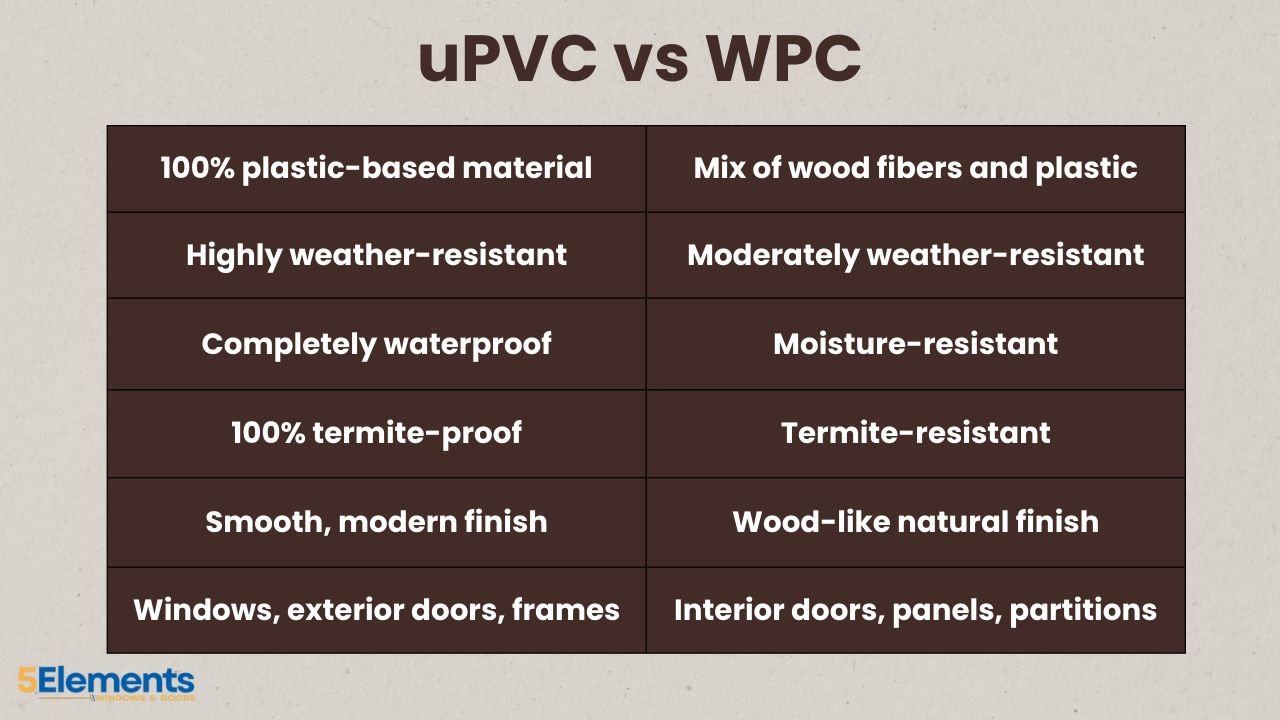
uPVC is made from synthetic- which means they are made chemically processed plastic materials, whereas WPC is a combination of plastic and wood fibers. This fundamental distinction impacts their durability which is the ability to last over time without damaging their appearance and their use. uPVC is a solid structure with a reliable performance, whereas WPC gives the combination of both- the natural look of wood and the strength of plastic.
Difference Between uPVC and WPC in Strength and Durability
uPVC is generally more durable and stronger, particularly for outdoor use. They do not get any damage like corrosio,n even if subjected to harsh weather conditions, and hence the long-lasting properties. WPC is tough, but it is more suitable for indoor use. Although it is more efficient than wood it might not be as strong as uPVC under extreme outdoor conditions.
Difference Between uPVC and WPC in Maintenance Requirements
uPVC needs minimal maintenance. It doesn’t require polishing or painting and will keep its look for a long time. WPC is also low maintenance; however, it will require periodic surface maintenance to keep its appearance, particularly in high-traffic areas.
Difference Between uPVC and WPC in Cost and Lifespan
The initial price for uPVC and WPC will vary based on the design and the quality. But, uPVC offers better long-term value because of its long duration and lower maintenance costs. WPC is typically used for interiors with a budget, where the appearance of wood is desired without the expense that natural timber would cost.
Difference Between uPVC and WPC in Weather & Moisture Resistance
uPVC can tolerate different climatic conditions. Hence, these are best used in regions with varied climatic conditions. Whether it be rainy season or summer, uPVC can withstand well. uPVC does not absorb water, so it is used for outdoor windows and doors. WPC also does not absorb water completely, but still it is not completely waterproof. So they are great for indoors, however it could degrade more quickly when exposed to constant outside weather.
WPC Windows and Doors – Where Do They Fit Best?
WPC doors and windows are ideal for interior spaces in which aesthetics are much more crucial than exposure to extreme conditions of weather conditions. They are often employed in bedrooms, bathrooms, living rooms, and office spaces because of their wood-like finish and stronger resistance to water as compared with natural wood. Although WPC is able to be used in outdoor spaces that are semi-covered, it is not advised for exterior windows and doors because prolonged exposure to sunlight and rain will affect its performance.
Comparatively, uPVC performs much better in the outdoor environments due to its superior resistance to weather and moisture. A drawback of WPC has to do with the fact that it could discolor or lose its surface in intense sunlight for long durations. In addition, WPC is heavier than uPVC, and this can hinder the design of the product and cause installation to be more difficult in some applications.
Which Is a Better Choice – uPVC vs WPC?
Ideal Scenarios for uPVC
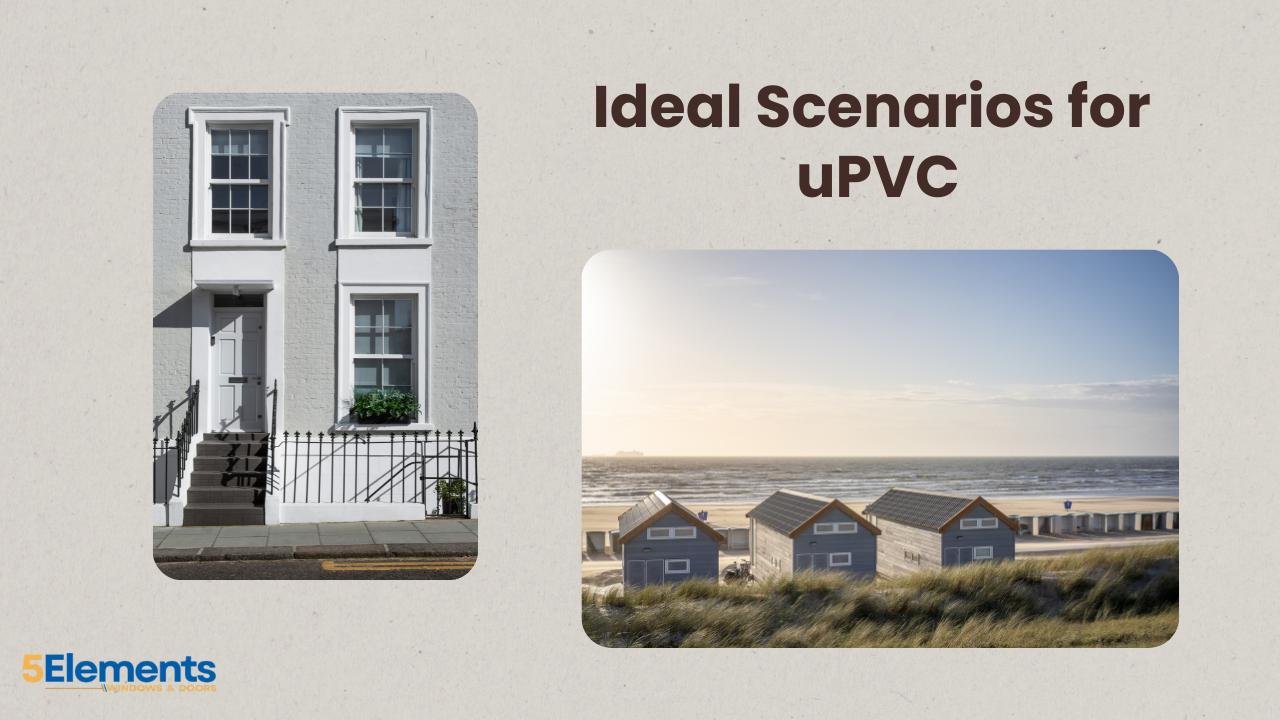
uPVC is the best option if toughness, durability as well as low-maintenance are the top priority. It is perfect for:
- Doors and windows for the exterior
- Homes located in coastal or humid regions
- Installations that last for a long time with minimal maintenance.
Long-Term Value Benefits
uPVC windows and doors are a great investment over the long run because of its long-lasting lifespan as well as its energy efficiency and low repair costs. It also increases insulation, thereby reducing energy usage.
Maintenance and Durability Advantages
Lacking the need to paint or polish, uPVC can save you time and money over the course of time. Its resistance to termites, UV rays, as well as moisture ensures long-lasting performance.
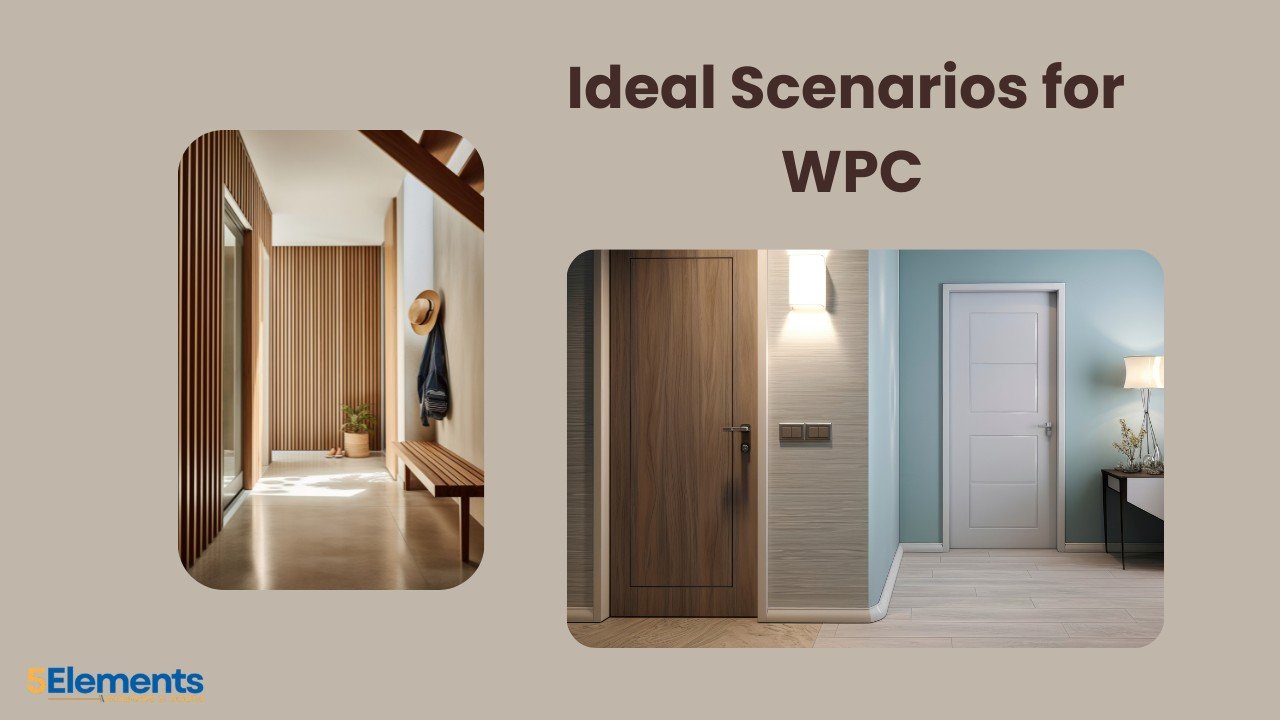
Ideal Scenarios for WPC
WPC is an excellent option for interior projects where style and design are crucial. It’s a good choice for homeowners who like natural wood, with the advantages inherent to natural wood. It is perfect for interior applications:
- Bedroom doors
- Bathroom doors
- Internal partitions as well as panels
Design and Finish Preferences
WPC has a broad range of textures and finishes that resemble natural wood ,making it ideal for interior decoration.
Budget-Based Decisions
For those looking for an affordable alternative to wood interiors, WPC is a viable option as it is able to balance the cost while still maintaining the natural and normal appearance.
Conclusion
Understanding the difference between uPVC and WPC allows homeowners to make informed choices when it comes to windows and doors. Weather resistance is another important characteristic of uPVC. It is also low maintenance. This makes it suitable for exterior use and long-term usage. WPC, however, has a wood-like appearance with superior resistance to termites and moisture over natural wood, which makes it a great choice for interior areas.
The right choice depends on certain factors like- where the material will be used, the environmental conditions, and your budget. By evaluating these factors carefully, you can select a material that enhances both the functionality and aesthetics of your home while delivering long-term value.
FAQ
1. What is the difference between uPVC and WPC?
uPVC is a plastic-based material, while WPC is made from wood fiber and plastic composites.
2. uPVC vs WPC: which material is better for homes?
uPVC is better for exterior use, while WPC suits interior applications.
3. Are uPVC doors more durable than WPC doors?
Yes, uPVC doors are generally more durable and weather-resistant.
4. Is uPVC waterproof compared to WPC?
uPVC is 100% waterproof, while WPC is moisture-resistant.
5. Which is better for windows, uPVC or WPC?
uPVC is better for windows due to its strength and insulation.