
A Complete Guide to uPVC vs Aluminium Windows: Which Is Better in 2026?
Choosing the best window material is now an essential decision for builders and also homeowners, particularly when making comparisons between uPVC vs aluminium windows. We have to consider certain factors like increasing temperature and noise pollution, and also energy efficiency, to understand that the performance of windows is more crucial than ever before.
Now in 2026, Indian homeowners will need solutions that provide comfort, durability, and long-term value. This increased awareness will result in deeper analysis of uPVC vs aluminium, two of the most sought-after window materials in modern-day design. Both have strengths; knowing the performance of each in actual Indian conditions is crucial before deciding on an investment. This guide provides a thorough and practical comparison of uPVC windows vs aluminium windows to help you choose which one is best according to your budget, home, and lifestyle.
What Is uPVC Windows Material and Why Is It Popular?
uPVC refers to Unplasticized polyvinyl chloride. The rising demand for uPVC windows for both commercial and residential projects is directly related to the uPVC windows material. uPVC can be described as an extremely durable plastic-based material that is typically used in doors and windows because it is weatherproof, waterproof, and requires minimal maintenance. Contrary to the conventional materials such as metal or wood, uPVC is engineered specifically to be used for the long-term outdoors. Its non-reactive properties make it extremely resistant to pollution, moisture and temperature variations.
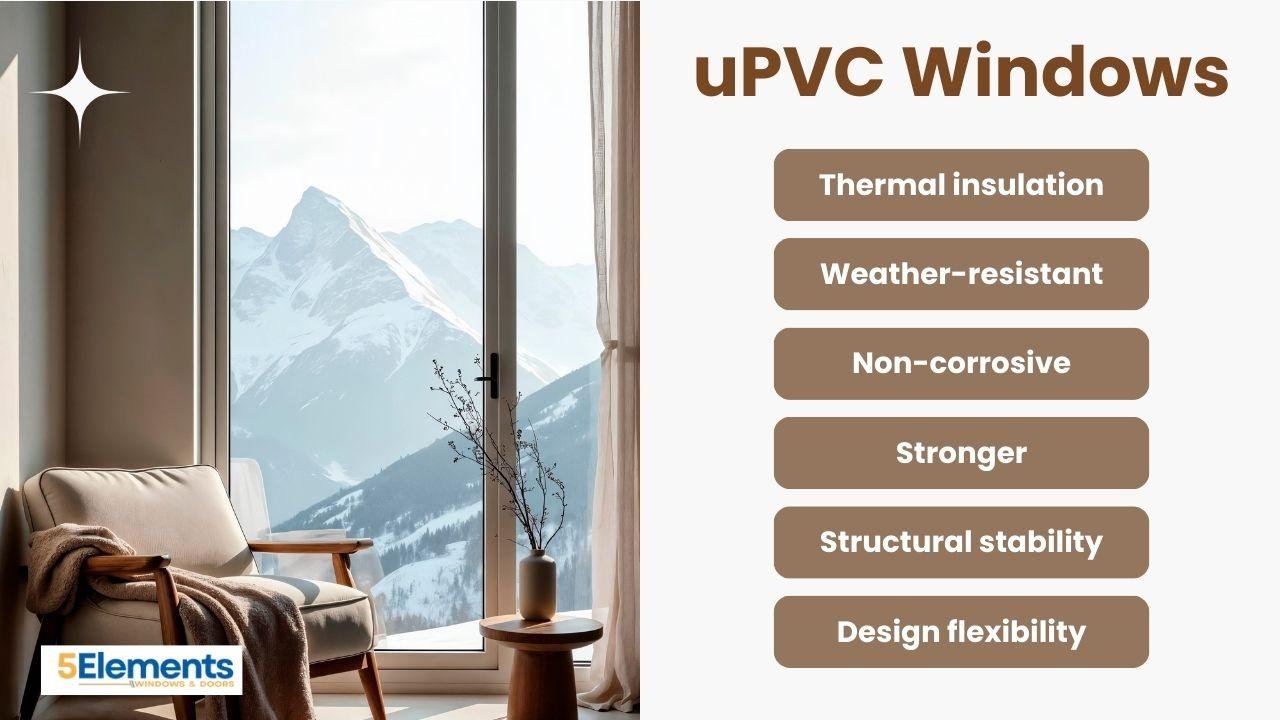
One of the main factors behind its popularity is the insulation. The uPVC windows material acts as a thermal insulator- this is by decreasing the heat transfer between outdoor and indoor spaces. This allows homes to be cooler in the summer, and warmer during the cooler months, which inturn improves the overall energy efficiency. The properties of uPVC windows material-
- Thermal insulation – helps to reduce heat transfer between indoor and outdoor spaces
- Weather-resistant – Resistant to weather, even in the extreme weather conditions
- Non-corrosive – Does not get corroded, rust or peeled with time.
- Stronger – Greater strength, resulting in a wide use for various building projects
- Structural stability – Ensures the structural strength and stability for many years
- Design flexibility – These are highly adaptable to various architectural requirements
uPVC Windows Advantages for Homes and Offices
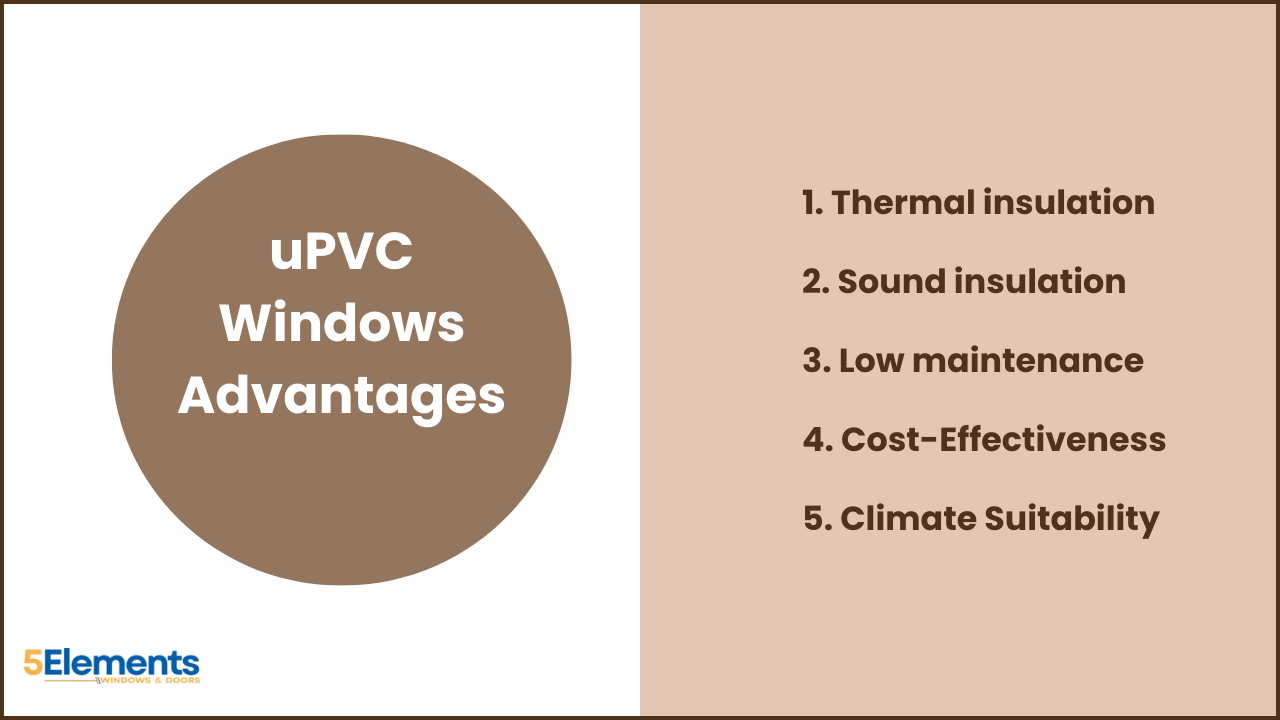
When you consider the uPVC windows advantages, it becomes apparent why they are becoming more popular over conventional materials. The uPVC windows advantages extend beyond aesthetics and directly enhance comfort, cost efficiency and long-term efficiency.
1. Thermal insulation
uPVC windows help to reduce heat transfer between indoor and outdoor spaces. This helps in maintaining a constant indoor temperature and thus decreases the need for air conditioners and heaters, which in turn leads to a lower energy cost.
2. Sound insulation
uPVC windows offer excellent noise reduction and are ideal for homes located close to noisy roads or urban zones. They can help create a quiet and peaceful indoor space.
3. Low maintenance
In contrast to aluminium or wooden windows, uPVC windows need little maintenance. A simple cleaning using water and soap suffices for them, as they do not wear out, fade, or change shape with time.
4. Cost-Effectiveness
The main uPVC windows benefits is their affordability and the long-term savings. The competitive pricing at the beginning, coupled with minimal operating costs and high energy performance make them cost-effective over time.
5. Climate Suitability
Windows made of uPVC are extremely effective for Indian temperatures. They are able to withstand high temperatures, heavy rain and humidity levels and are therefore suitable for commercial and residential areas.
What are Aluminium Windows?: Strength, Style, and Performance
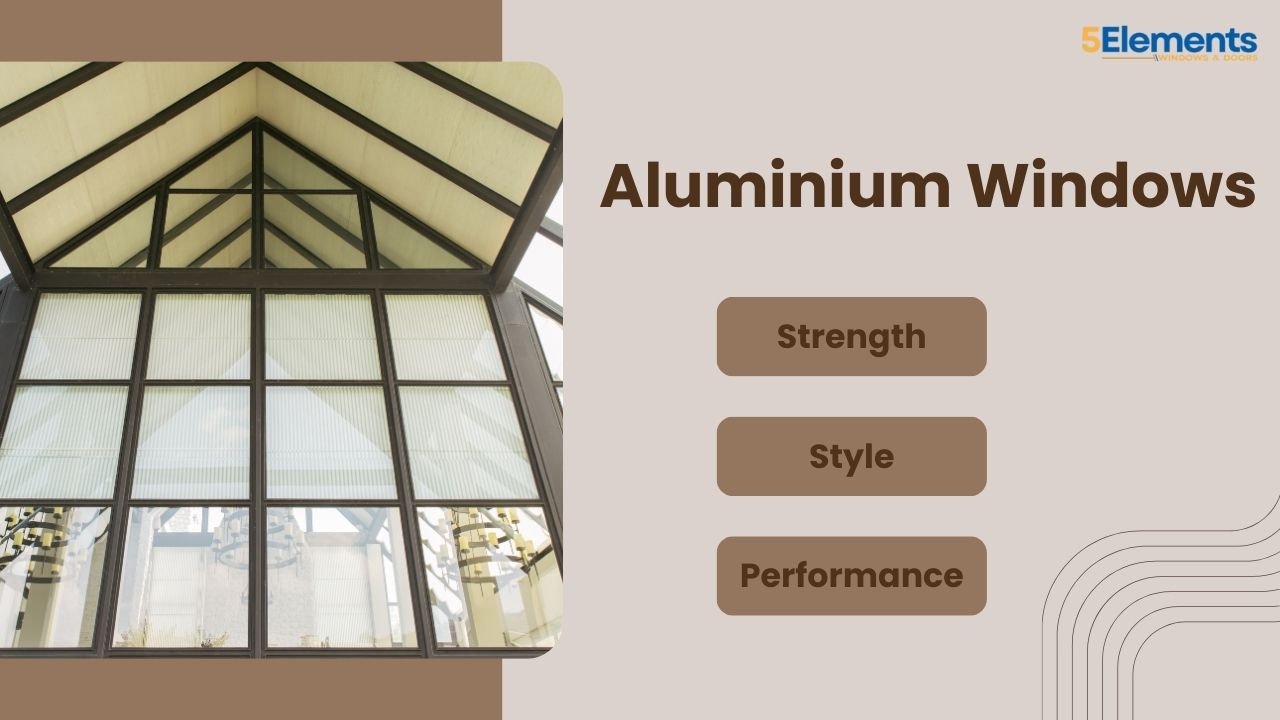
Aluminium windows are commonly utilised in modern architecture due to their long-lasting durability and contemporary look. The different properties of these windows, which includes- structural strength, elegant designs, and the capacity to hold large glass panels makes them the preferred choice of designers and architects. These types of windows are typically used in luxury development projects- whether it be commercial areas or residential, in which they are able to design with a variety of options. Not only appearance and looks, but it is also crucial to understand how aluminium windows perform with regard to insulation, maintenance, as well as long-term comfort prior to making a final choice.
Strength
Aluminium windows are known for their strength and durability. They can support huge glass panels without breaking or warping, which makes it suitable for large openings, floor-to-ceiling window as well as high-rise applications. Aluminium windows are strong enough to be ideal for high-end commercial and architectural designs.
Style
From a style perspective and design perspective, aluminium windows provide an attractive and minimalist design. Their slim frames can accommodate more glass, thus enhancing natural light as well as modern appeal. Available in a range of colours and finishes, aluminium windows are a great complement to the modern architectural designs.
Performance
Regarding performance, aluminium windows offer toughness, but are limited in terms of insulation. Because aluminium naturally conducts heat, the windows might permit heat transfer, unless they are fitted with a thermal break. Maintenance is minimal, since aluminium can corrode in high-humidity or coastal environments and may require coatings to keep its long-term performance.
uPVC Windows vs Aluminium Windows
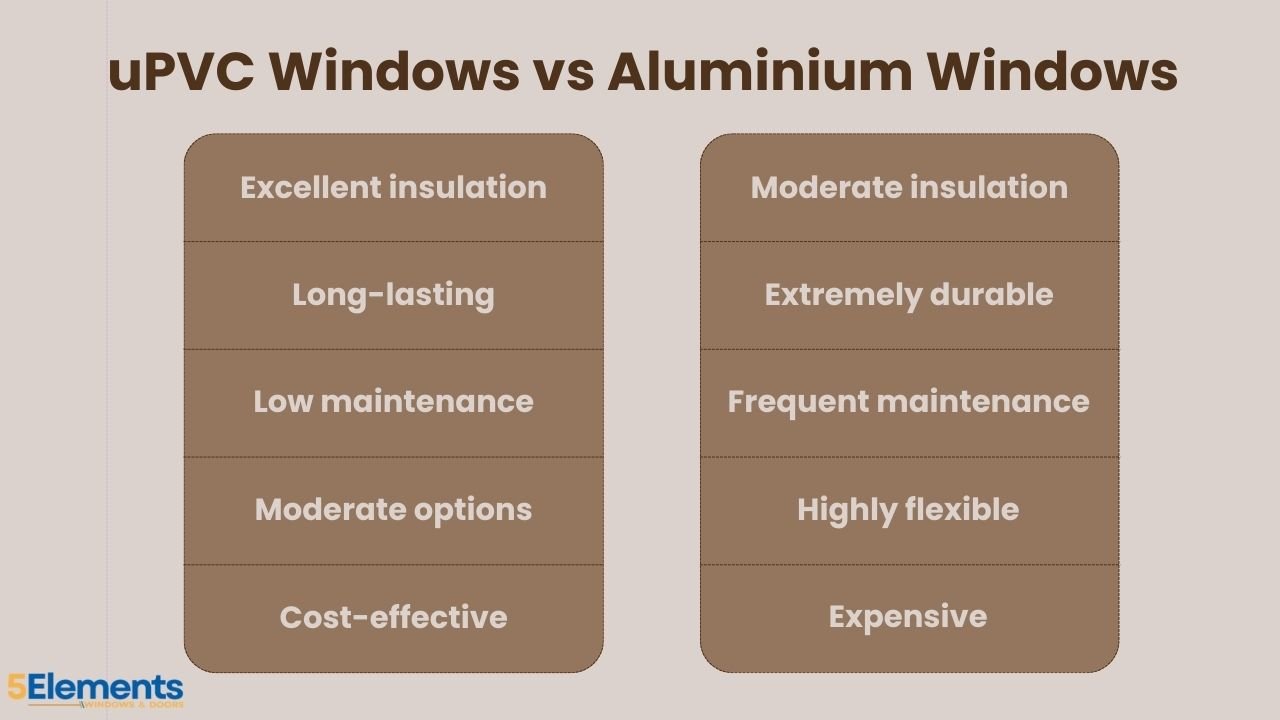
A comparison of uPVC windows vs aluminium windows shows few clear differences in terms of performance, comfort and worth.
Energy Efficiency
Energy efficiency is among the most important aspects when looking at uPVC windows and aluminium windows. uPVC frames provide superior thermal insulation, which reduces the transfer of heat and increases the indoor environment. Aluminium, unless it is fitted with thermal break, is prone to conduct heat better.
Durability and Lifespan
Both are extremely durable. However, uPVC windows material is resistant to pollution as well as moisture and also UV light. Even though aluminium frames are strong, they could be affected by corrosion over time.
Maintenance
uPVC windows normally need only a little maintenance, and hence they can last for a long time. Aluminium windows might require frequent maintenance, particularly in industrial or coastal areas.
Design Flexibility
Aluminium frames are slimmer and allow for larger glass spaces, which makes it suitable for contemporary styles. uPVC window design provide a variety of styles that are suitable for modern and traditional houses.
Cost and Long-Term Value
In terms of cost window options, uPVC windows usually provide better value. They are less costly to maintain, and their energy savings make them more cost-effective than aluminium in the long run.
Which Performs Better: uPVC vs Aluminium Windows?
1. uPVC vs Aluminium: Indian Climate
The Indian climate has its own particular challenges, for example, extreme temperatures, monsoon rains or the rising humidity, and also the increasing pollution levels. This is why it is important to compare uPVC vs aluminium windows. uPVC windows work exceptionally well in areas of high temperatures in terms of reducing heat loss and keeping comfort inside. Their both sound and thermal insulation properties are ideal for tropical as well as subtropical climates.
Also, heavy rainfall and humidity can cause damage to the surface in some materials. As we know, uPVC is non-reactive and is not affected by humidity, it makes ideal for monsoon-prone and coastal areas.
In urban areas that are polluted, uPVC windows resist degradation, hence preserve their appearance by requiring only minimal cleaning. Since uPVC windows normally need only little maintenance, they can last for a long time.
Noise pollution is another major issue for Indian cities. uPVC windows provide better insulation for acoustics, which reduces outside noise and increases overall home comfort. When the overall performance of the climate is considered, uPVC windows offer a more stable and secure solution to a range of Indian conditions.
2. uPVC vs Aluminium: Cost, Maintenance and Long Term Value
Cost is one of the main differences when deciding between uPVC vs aluminium window systems. Although aluminium windows look more luxurious, the cost of owning uPVC windows is a different story
The initial cost of uPVC windows tends to be lower than that of aluminium, in particular when similar performance characteristics are taken into consideration. The installation costs are also competitive. The cost of maintenance over time is substantially lower for uPVC windows. Aluminium frames might require additional treatments or replacements when in tough situations, resulting in higher long-term costs.
From an investment standpoint, uPVC windows offer excellent returns. Their energy efficiency can lower the cost of utility, and their durability will mean fewer maintenance or repairs. For homeowners and builders alike, this is more valuable over the long run.
Which Should You Choose in 2026: uPVC vs Aluminium Windows?
The final decision on uPVC windows vs aluminium windows will depend on many factors- budget, home style and usage requirements. For houses including apartments and villas, uPVC windows are usually the ideal choice because of their insulation, ease of use, and cost-effectiveness. They are ideal for those who need long-lasting performance and a minimal maintenance. On the other hand, aluminium windows are suitable for commercial buildings with large glass frontage as well as architectural styles that prioritize thin frames and aesthetics more than insulation. In the majority of the residential constructions, particularly those in Indian circumstances, uPVC windows are preferred since they offer a more comfortable balance of effectiveness and worth.
Conclusion
The choice between uPVC vs aluminium windows is a crucial decision that directly impacts the comfort, energy efficiency, and value over time. As we know, both types of windows provide distinct advantages, but their performance is largely dependent on the weather, maintenance, needs, and the overall cost.
When looking at the uPVC windows vs aluminium windows, uPVC windows are a preferred option for residential buildings in India. The excellent insulation provided by the uPVC windows material assists in controlling the temperature inside, cuts down on noise, and reduces energy use. These advantages, along with low maintenance and long-term performance of uPVC windows, make it particularly attractive for contemporary offices and homes.
On the other hand, aluminium windows are suitable for high-rise buildings or commercial buildings with large glass windows. These are good options for projects that prioritize modern design. However, their greater energy conductivity and the high maintenance requirements could impact comfort and costs if they are not addressed properly. Nowadays, since we are prioritizing energy efficiency, sustainability, and cost-effectiveness, uPVC windows have become the more feasible and durable option for homeowners.
FAQ
1. What is the main difference between uPVC windows and aluminium windows?
uPVC windows provides better insulation and aluminium windows are more stronger.
2. Which one is better for Indian homes: uPVC windows and aluminium windows?
uPVC windows are typically more suitable to Indian climates.
3. What are uPVC windows made of?
uPVC is made of unplasticised polyvinyl chloride which is a tough polymer.
4. Which type of window offers more investment return?
uPVC windows can provide the best value long-term for houses.
5. Is uPVC superior to aluminium in homes?
Yes, uPVC will be the preferred choice for the residential buildings.